
Introduction
“Surely the craft of sewing, in all its manifestations, is as worthy of study as joinery or smithing.”
—Dr. Laurel Thatcher Ulrich
Sewn objects surround us. They clothe us from birth, cover our bodies day and night, furnish our living spaces, line our coffins. Until recently, nearly every woman knew how to sew—knowledge imparted in childhood and employed throughout a lifetime.
Sewing was considered innately feminine—and certainly, women had to do a lot of it. Before industrialization, it fell to women to sew the family’s bed linens and most of their clothing. Denied educational and artisanal training options open to men, women often relied on their needle to support themselves. Men sewed too—usually in professional capacities.
Without formal art training, women also used needle arts to express themselves. In quilts, embroidery, and other “fancy work” projects, they beautified their surroundings, made gifts of love and friendship, expressed emotion, proclaimed their identity, and conveyed their support for causes.
Sewn In America examines the way in which American women (and men) from the 18th and 19th centuries learned and deployed their needle skills to furnish their households, earn livings, and express themselves, with contemporary examples of the themes explored.

Making
Learning to Sew
“I am making a sampler, and have all the capital letters worked and now will make the small ones. It is done in cross stitch on canvas with different color silks. I am going to work my name, too.”
—Caroline Cowles, Canandaigua, New York, age 12, 1854
Girls (and many boys) learned basic sewing skills from their mothers or other female relations. In villages and towns in the years before public schools were universal, many attended “dame schools” where a neighbor taught young children reading, sewing, and other basics.
Enslaved children—unable to attend school—learned from their elders. Many enslaved women were skilled seamstresses who passed their skills to daughters and granddaughters.
Families who could afford it sent their daughters to nearby or boarding “seminaries” where they might make more decorative samplers and learn other decorative needlework techniques.
Gradually, girls’ academic education improved, and sewing was not emphasized, resulting in an overall decline in skills. The new field of “Home Economics” revived the teaching of these and other skills with a “scientific” approach in the late 1800s.


Which Stitch?

Slow Fashion: Altering and Mending
“I shifted a ruffle on my white lawn dress waist- Last year it was a “hip ruffle” this year it is ‘transposed’ into a bertha ruffle.”
— Lilla Wyman’s Diary, Boston, 1893
In the 1700s and 1800s, fast fashion was unheard-of. Even the cheapest fabrics cost more than the labor to sew them into clothes and linens—up to 90% of a garment’s cost in the 1700s. In the 1820s, a Washington, DC milliner and dressmaker’s account book charged $2.50 to make a dress whose fabric had cost $8; she paid her assistants $3 to $4 a month, so the labor cost was significant, but still less than a third of the fabric’s cost. With the decreased cost of machine-made fabrics, this discrepancy diminished, but thrift was an ingrained cultural practice.
At every level of society, consumers were frugal with their textiles: mending tears, patching holes and stains, darning stockings, and altering garments for as long as they could still adapt to new trends. Adults’ clothes could be remade for children when they were past mending. Thrift extended to quilt making too. Worn-out crewel embroidered motifs were cut out of their bed coverings and curtains, or used as quilt backings. Quilted petticoats were sometimes made into quilts and vice versa (see Museum Catalog), and worn-out quilts could serve as batting for a new one.


“Guimpe Dress made from a wrapper of Aunt Babe’s – Jan 1899” and “Silk Petticoat made from Mama’s–Emada–Feb 1899,” from Emada Durfee’s Scrapbook, Decatur Illinois. DAR Museum, 2009.23.7


Road to Ready To Wear: Made For You, Made By You, Or Made for Anybody?
Until the ready-to-wear industry made men’s, women’s, and children’s garments widely available, women had to sew many of their family’s clothes. But for most of the eighteenth century this excluded fashionable gowns, which were beyond the dressmaking skills of most women. Less fashionable garments that were easy to make at home, but fashionable gowns demanded specialized skills passed down from one experienced artisan to another.
(The term “mantua-maker,” meaning “dressmaker,” long outlived the garment for which it was named. The simple draped T-shaped mantua introduced in the 1670s was the precursor of most eighteenth-century gown styles. Mantuas were revolutionary because they were made by women instead of, as more formal dresses were, by tailors—who unsuccessfully resisted this incursion into their trade. Female dressmakers were here to stay, and dressmaking, and not just less skilled seamstress work, became a skilled employment opportunity for women.)
Gowns had to be snugly fitted to the customer’s corseted body, draped and tucked and stitched down to fit over the stays (corset) perfectly snugly and smoothly to achieve the fashionable fit. Pleating, tucking, and stitching this way also conserved costly fashionable fabrics for later reuse. None of this could be achieved either by flat patterns or mass production, and such sewing was usually done by highly trained dressmakers called “mantua-makers.”
The new bodice styles introduced in the 1780s, with pieced backs and drawstring-gathered fronts, heralded a major shift, as they could more easily be traced and duplicated at home. Dressmaking manuals throughout the 1800s advised paying a dressmaker for a well-fitted bodice and using it as a pattern for additional dresses. Still, many women up and down the social scale employed dressmakers for more than a bodice template. Today’s dependence on readymade clothing leads us to think of custom-made garments as a luxury reserved for the elite. Yet in the nineteenth century, nearly every community had a dressmaker of some skill (with the occasional exception of sparsely populated rural or early frontier communities). These professionals might make dresses as a part-time supplement to the family income or might support themselves entirely with their work. On a larger scale, there were many dressmaking businesses in larger towns and cities employing many women in various stages of garment construction (cutting, fitting, and sewing).
Just as the business models of dressmaking varied widely, so too did women’s dependence on professionals. More affluent women could employ a dressmaker for all their dresses (and many who could afford it hired less-skilled seamstresses to do the “plain sewing” for the household as well). Many used the dressmaker’s skill in cutting and fitting but much of the sewing themselves. Women with smaller clothing budgets might go to a dressmaker less often, perhaps for a “best dress” once a year or less often, and copy the bodice patterns for other garments as described above. Unskilled attempts might go badly (see illustration).
Even after the advent of paper patterns, a custom fit could be difficult to achieve. As societal expectations demanded that women present a “decent,” tidy, respectable appearance—neither scorning mainstream fashion nor following it to extravagant or frivolous excess—achieving a good fit was an important aspect of how a woman presented herself, aside from her desire to look well turned out.
With the advent of paper patterns, mail-order catalogs, eventually ready-to-wear, women no longer needed dressmakers, whose numbers plummeted in the first two decades of the 1900s. But something was lost in the process: they had offered not only skill, but guidance on the latest styles and what design details might best suit a customer’s body type, complexion, and personal style. Before ready-to-wear, a woman and her dressmaker were co-designers, and each dress was a unique creation based on their choices of fabric and unique combination of construction details. Customers lost some of the individuality of custom-fitted and individually designed garments, and the relationship with a trusted fashion adviser who was also a good dressmaker. Patterns, drafting systems, and instruction books all attempted to help women make their own dresses. Patterns offered the best option for individuality, as each pattern supplied variations on sleeves or other details. The customer was free, and encouraged, to add her own touches. Undoubtedly many home seamstresses did so: after ready-to-wear took over American dressing habits, this aspect of home sewing was its chief attraction to many women who chose (and continue to choose) to sew their own clothes when it was no longer a cost-saving strategy.


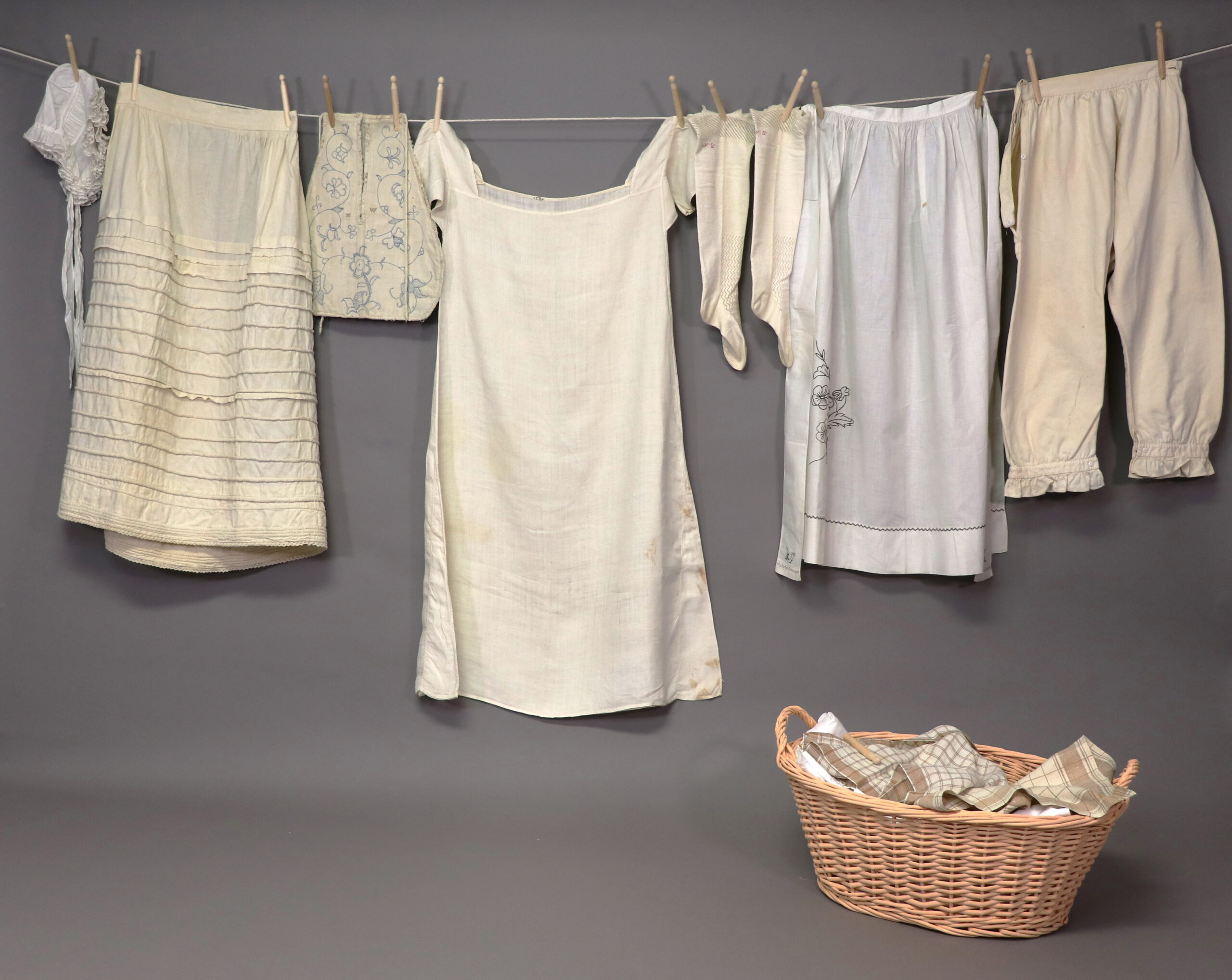
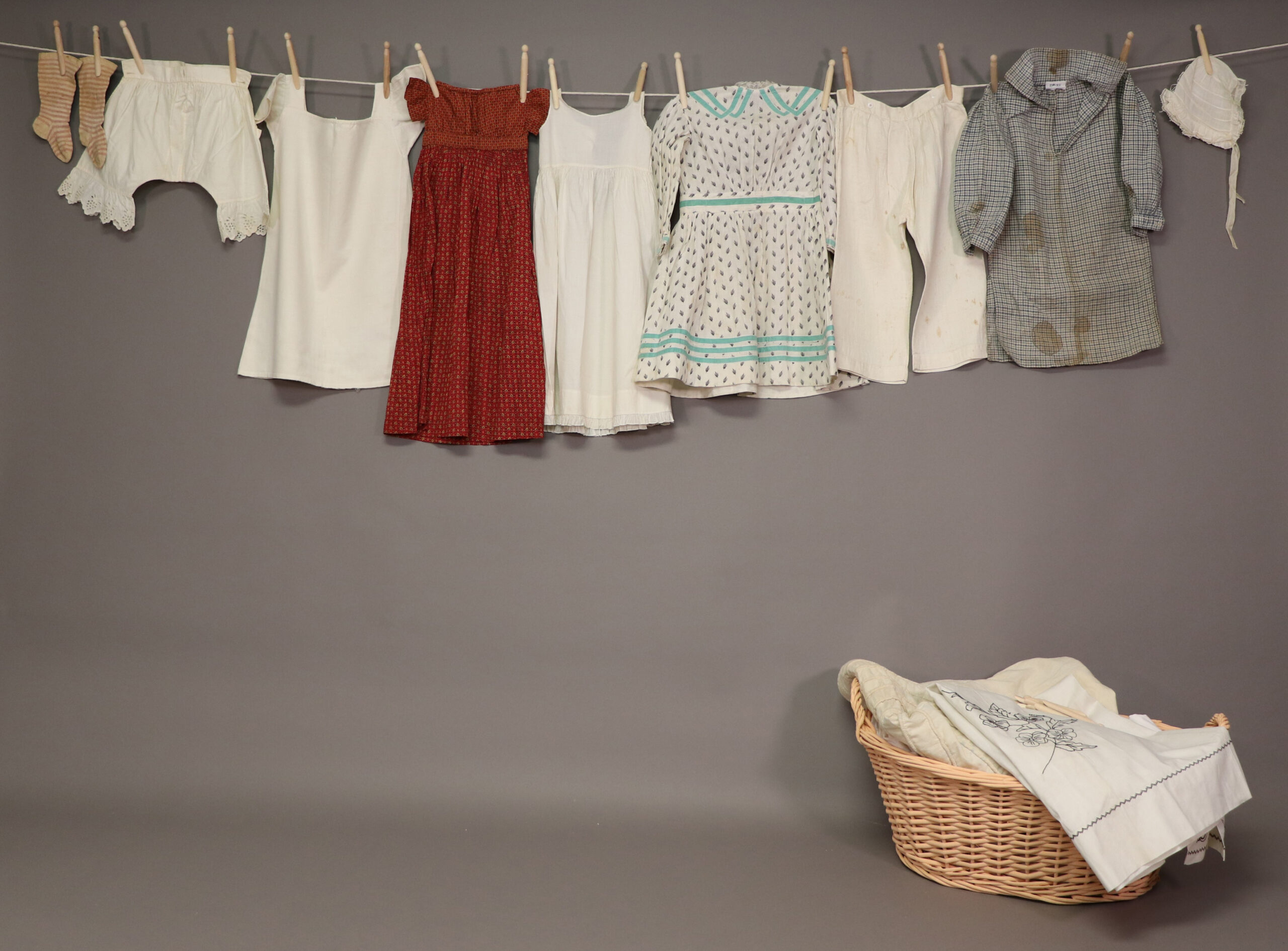
Necessary Needlework: Supplying the Household
Imagine you’re a housewife in 1750. Or 1800. Or 1850. Or 1890.
You can’t buy sheets, towels, tablecloths, or clothing ready-made. You have to sew it ALL.
Unless you are very poor, you can hire a dressmaker and a tailor for your main garments; but you’ll still be making undergarments, shirts, and children’s clothes at home. You might hire help, but you’ll still buy and cut the fabric and do plenty of sewing.
Typically, you will pick up a needle anywhere from eight to twenty-five days of every month. Making, mending, altering, darning: it’s a constant cycle of textile work.
Over the course of the 1800s, more things could be store-bought. But women’s diaries up through the 1890s record constant sewing, mending, and knitting.
This display contains examples of many—but not all!—of what American women had to sew and knit for their families. The items span a wide time frame to emphasize the long period during which all this sewing was necessary.
And remember: each of these was made in multiples . And children constantly outgrow things.
Before exploring the sewing women did as a matter of choice, it is important to consider the huge role sewing played in most women’s lives. Making and maintaining clothing and textiles (mending, cleaning, ironing, and inventorying) was the inescapable duty of women of every economic level, in every region and social group, right up to the end of the 1800s. The sewing machine partly eased this duty; but the growth of the ready-made industry at the turn of the twentieth century was what really liberated women from their endless household sewing. The quilts, the embroidered accessories, the needlepointed pictures and chair seats, all the decorative clothing accessories and home furnishings—the “fancy work”—was done in addition to the everyday work known as “plain sewing.”
For vast numbers of women, “plain sewing” was a constant chore. Scarcely any clothing or linens were available ready-made in the first half of the 1800s. Even bedding such as mattresses and pillows were commonly made at home through much of the 1800s, often along with bed and window curtains. The unavoidable sewing and mending were not necessarily dreaded; many people then and now have found repetitive stitching soothing and meditative. Lucy Larcom, born in 1824, recalled in her memoir A New England Girlhood how after dreading the daunting feminine role of “making clothing for mankind,” she eventually “really began to like plain sewing . . . fingers flying and thoughts flying faster still, —the motion of the hands seeming to set the mind astir.”
Nevertheless, we can’t help being impressed with women’s productivity, and it is in this context that we should consider women’s choosing to do sewing for charity through “sewing societies” and church groups their quilting alone and together, and their personal “fancy work,” including embroidery and other decorative needle crafts. Women’s output in what we now enjoy collecting, studying, and exhibiting—the quilts and other needlework—can be doubly appreciated when we realize these were addenda to the more quotidian sewing and mending that filled so much of their time.



Necessary Needlework: To Earn a Living – Men’s Trades
Although we are focused on women’s sewing, it would be remiss not to mention the many men who sewed. Boys were often taught very basic sewing skills; but as adults, few men sewed regularly. When they did, it was usually as part of a skilled trade—trades that often hired women assistants. The garment trades dominated by men included tailoring, glove making, shoemaking, and corset making; only dressmaking and millinery were almost exclusively female.
But many other businesses involved sewing, including upholstery, which included the manufacture of all soft furnishings from mattresses to curtains as well as the fabric-covered seating furniture that the term connotes to us today. (Women sometimes owned these businesses too: Elizabeth “Betsy” Ross was an upholsterer.) Ships’ sails were made by men. Carriages’ interiors were upholstered and sewn; so were coffins.
Other trades involving sewing included bookbinding, saddle- and harness-making, as well as other leatherworking—even surgery involves a needle and thread. The London Tradesman of 1747 lists over sixty trades that involve sewing. Many if not most of these trades hired seamstresses to help with the sewing; but they were male-dominated industries run by, and hiring, men who sewed.
Soldiers and sailors also had to pick up a needle and thread on occasion. For sailors, mending sails was a regular chore; and on a long sea voyage, they had to mend their own clothes—as did soldiers far from home.


Necessary Needlework: Women in Garment Trades
Until fairly recently, few occupations were open to women, but the sewing skills a girl learned could earn her a living. With specialized training, she could become a dressmaker or a milliner (hat designer/maker). Without such training, she could be a seamstress hired by families to make basic garments and linens, or working for a dressmaker, tailor, or upholsterer.
Dressmakers and milliners with their own shops could make a good living. But the work was subject to seasonal dry spells, and customers didn’t always pay their bills. Seamstresses and factory workers, by contrast, were notoriously poorly paid and overworked.
As the garment industry grew, thousands of women—mostly recent immigrants—found grueling jobs in factories, or in sweatshops (smaller commercial sewing spaces), or piecework (completed at home, often with assistance of young children). Men worked in factories and sweatshops too, but usually in more skilled, better-paid roles.

Woodcut of women cutting, fitting, and sewing dresses, possibly a dressmaker’s shop, 1840s. Alexander Anderson. New York Public Library.

“The Haunted Lady, or The Ghost in the Looking-Glass,” 1862. The plight of poorly-paid and overworked seamstresses gained much public attention in the second half of the 1800s, but conditions did not change over time, only worsening with the introduction of the factory system. Cartoon by John Tenniel for Punch (London), reprinted in the United States.


Necessary Needlework: Forced to Sew
Not all women were able to sew just for themselves and their households; some were forced to sew for others.
Enslaved seamstresses on larger Southern plantations were expected to sew clothing for themselves and other enslaved women, men, and children, as well as household linens and clothing for the enslaver’s family. Women in prisons and workhouses were sometimes expected to sew, to offset their expenses and allegedly provide them with useful skills after release.
Sewing was part of the curriculum both in missionary schools run by Americans around the world and in the boarding schools which many Native Americans were forced to attend. Sewing samplers in cultures which had no need for them was simply one means by which missionaries imposed white, Christian, middle-class ideas and values.


Meaning
Textiles—like all objects from the past—contain meanings, and clues into the lives of the people who made them.
Some meanings were intended by their maker, others become clear in retrospect.
In this section of the exhibition, we explore the many reasons women (and some men) sewed: out of necessity or for pleasure, to express emotions, ideas, and support for social causes.
Women are still using sewing, knitting, and crochet needles to express themselves, reclaiming traditional tools and materials which have often been devalued, including by early feminists, as being “women’s work.” We are including contemporary pieces as well as antiques.
Sewing for Pleasure: Creating Beauty, Employing Skill
With the necessary “plain sewing” done, many women sewed to beautify the home, which was considered their “natural” domain by nineteenth-century middle-class culture. Quilts and embroidery embellished bedrooms and parlors, demonstrating the skill and taste of their makers.
Women undoubtedly derived a sense of agency from choosing what project to undertake, gaining confidence in themselves and their abilities through learning new stitches and techniques. The work itself could be soothing in its repetitiveness, allowing one’s thoughts to roam while stitching.
The project completed, a woman could take pleasure and pride in displaying something beautiful which she had made.


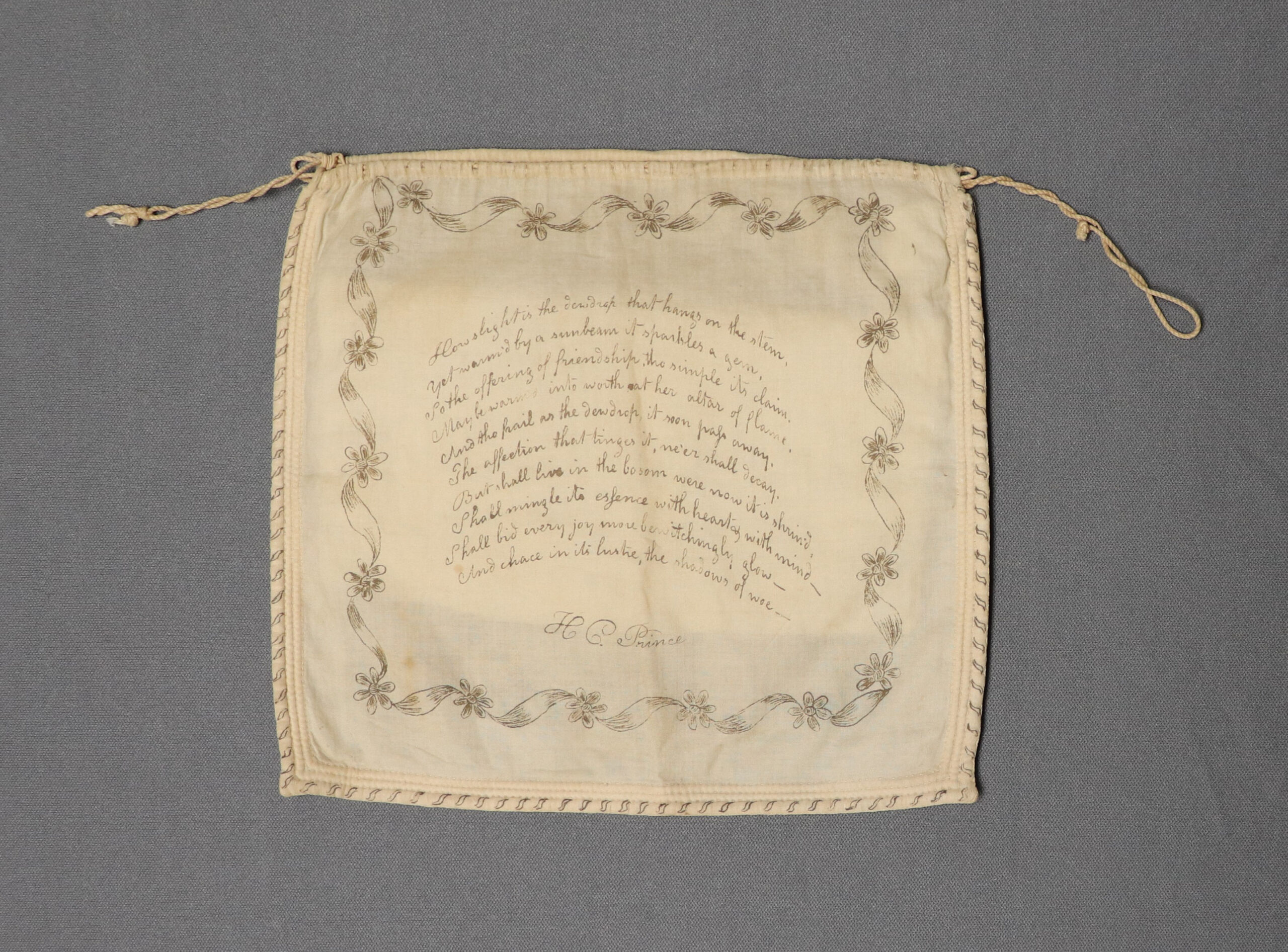
Expressing Emotion
As women the world over have done for centuries, American women have used their needles to express a variety of emotions. Simply sewing for one’s family can be an act of love as well as duty, but women also sewed gifts of love, friendship, and thanks for family and friends.
Displayed on a wall, fine needlework can express pride in its content or its artistry and skill. All the decorative needlework shown here was surely a source of pride to their makers.
Grief, healing, testimony, and remembrance can also be channeled through needle and thread.Grief, healing, testimony, and remembrance can also be channeled through needle and thread in numerous ways.
Just some of these, with examples from the nineteenth century and more recent years, are touched on here. We cannot fully convey the variety of ways in which American women of widely different backgrounds from the pre-Revolutionary era to today have expressed their many emotions with needles, thread, and yarn; but we present a sample and introduction to the topic.


Expressing Emotions: Grief, Remembrance, Healing
We process and heal from the trauma of loss in many ways. Creative outlets, including sewing, have always been a useful tool for women in response to a death. The repetitive process of stitching itself has soothing properties acknowledged by modern psychiatry. The result becomes a tangible statement of grief.
The sewn piece may also act as testimony—bearing witness to a life, a death, a story that must be told.
While such textiles are deeply personal, they may also, when shared publicly, help others who have experienced similar loss, or raise awareness of an event or issue.


Expressing Identity: Textiles Talk
The study of material culture—the objects made and used by people every day—is based on the idea that these items convey information about that culture. Clothing and textiles are among the most personal items we own, and they communicate messages about our cultural rules, social groups, and personal taste. Clothing gives clues to personal and group identity, whether intentionally or not. In sewing clothing and decorative textiles of thoughtfully chosen designs, American women have proclaimed and celebrated their identity—personal, familial, regional, religious, ethnic, or national.
Personal Identity


Gender Identity

Family and Regional Identity
Family history, connections, allegiances, and affectionate ties can all be proclaimed through sewing.
As women have traditionally been the keepers of family traditions and bonds, it would seem obvious that their common medium—textiles—would be used to forge and maintain these ties.
Many regional designs appear in textiles: women made quilts and needlework in designs known to and favored in their area. Exchanging and copying each other’s designs, women in their communities produced works which often—consciously or otherwise—reflect their region’s styles and culture.


Religious Identity
Sewn items surround our bodies in the rituals of life often celebrated in religious ceremonies: blankets at a baptism or a bris, wedding garments, burial shrouds. In between these milestones in everyday life, textiles can convey religious affiliation, reinforce bonds of a community of faith, or be key parts of religious observance.


National Identity
Flags and eagle motifs are obvious motifs signaling patriotism, but other symbols have been used in earlier times, and subtler gestures may also proclaim national identity. Three garments here show different ways to celebrate the nation’s birthdays.


Heritage
As a nation composed largely of immigrants, we identify as Americans but may also preserve and cherish traditions of the countries where we or our forebears were born. Indigenous Americans combine their own longstanding traditions with post-contact influences.


Expressing Concern, Showing Support: Sewing for the Greater Good
Prohibited from voting or holding office and excluded by social conventions from political activism, American women of the 1700s and 1800s used the tool assigned to their gender—the needle—to express their opinions, improve their communities, and support causes.
Women in nineteenth-century villages, towns, and cities nationwide formed “Sewing Societies” to gather regularly to sew for charity. Some groups were affiliated with churches, but vast numbers were secular and formed along social groups. (Women also met along racial lines: most white women in antislavery groups excluded African Americans, who formed their own sewing and antislavery societies.) Many sewing societies focused on local institutions: orphanages, hospitals, or schools for disadvantaged youth. Often the goal was to make garments and bedding to give to local families in need; sometimes this included paying indigent women to sew some of these items. Aside from making items to donate directly, women sewed and embroidered things to sell at bazaars or “fancy fairs” beginning in the 1830s.
Such groups offered women a welcome opportunity to socialize and connect with one another in their community, with a regular morning or afternoon away from their home duties. The notion of a female-centered, female-led space aroused some anxiety and ridicule; some writers mocked sewing circles and assumed they mostly fostered a space for gossip. “I wish to gracious you could attend one of our Sewin’ Society meetin’s,” began one story written phonetically in an attempt at a humorous rural accent. “Miss Birsley had got some shirts cut out . . . [but] ther tongues went a good deal faster’n ther fingers did. . . .”
Women continue to sew, crochet, and knit to voice concerns about social and global issues (see Craftivism, cat. numbers 81–87). Using needles for benevolent efforts, knitters donate to NICU units, senior centers, homeless shelters, hospices, and many other groups. Women (and some men!) make quilts to thank veterans for their service (cat. 80), or for people who have lost their homes, including refugees or survivors of floods and earthquakes (to list but a few examples of altruistic quilt making). Name a medical issue and there are quilters making quilts to support people struggling with it: memory quilts for those with Alzheimer’s, or quilts to keep cancer patients warm during chemotherapy, to name but two. In the early months of the COVID-19 pandemic, women plundered their fabric stashes to sew thousands of colorful fabric masks to help healthcare workers during medical equipment shortages.
Today, women can take active roles in society and politics, whether as professionals with expertise or as concerned citizens. But there will continue to be those who pick up their needles to address or help alleviate these issues, too.


Sewing For The Troops
Sewing Societies sprang into action at the outbreak of the Civil War. Women on both sides, including many new recruits, volunteered countless hours to knit and sew clothing and bedding, and to make things to raffle and sell at fairs to support the troops.
Women have continued to organize to sew and knit in wartime, both to supply troops with useful clothing and bedding, and to raise money and express support.
“We are going to sew for [soldiers] in our society and get the garments all cut from the older ladies’ society…They say they will provide us with all the garments we will make. We are going to write notes and enclose them in the garments to cheer up the soldier boys.”
—Caroline Cowles Richards, age 19, New York, May 1861


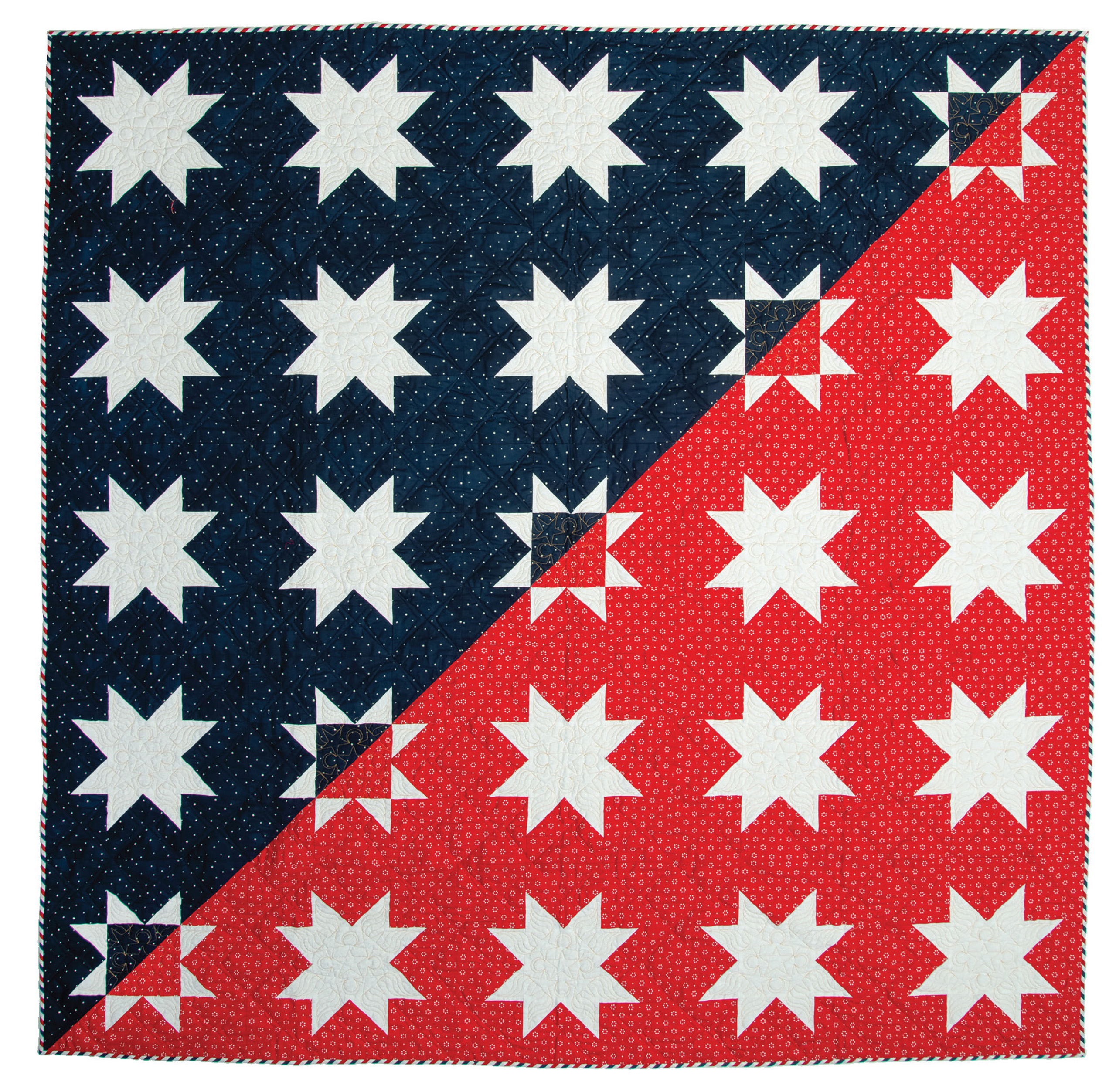
CRAFTIVISM: SOFT MEDIUM FOR HARD TRUTHS
“The image of women through the ages, without much social agency…stitching their anger into something useful is something I think about every time I pick up the needles.”
—Jennifer O’Brien
Girls (and many boys) learned basic sewing skills from their mothers or other female relations. In villages and towns in the years before public schools were universal, many attended “dame schools” where a neighbor taught young children reading, sewing, and other basics.
Enslaved children—unable to attend school—learned from their elders. Many enslaved women were skilled seamstresses who passed their skills to daughters and granddaughters.
Families who could afford it sent their daughters to nearby or boarding “seminaries” where they might make more decorative samplers and learn other decorative needlework techniques.
Gradually, girls’ academic education improved, and sewing was not emphasized, resulting in an overall decline in skills. The new field of “Home Economics” revived the teaching of these and other skills with a “scientific” approach in the late 1800s.


